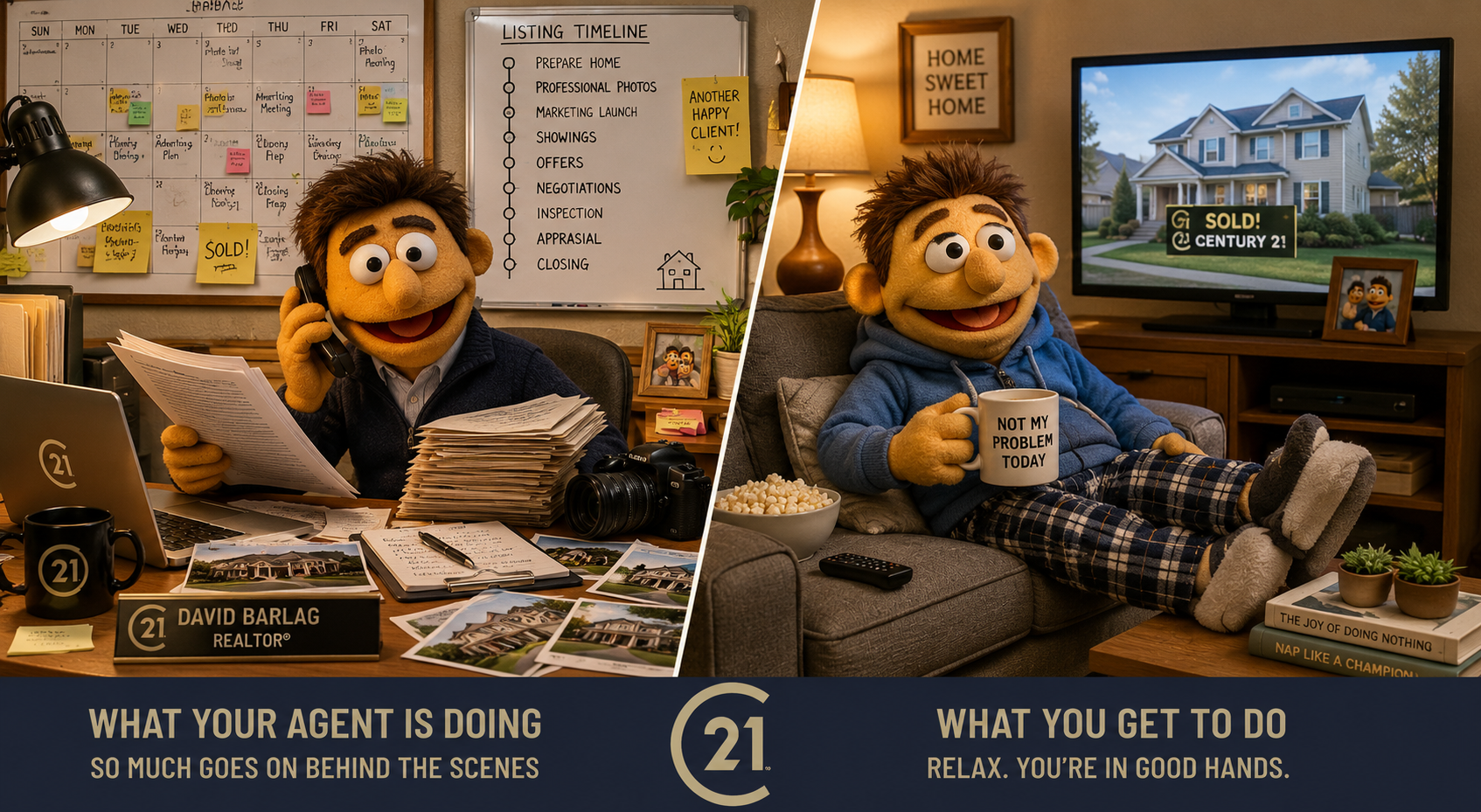
It is a fair question. And most agents will give you a fair answer. Professional photography. MLS listing. Open house. Negotiate offers. Show up at closing.
That is not wrong. It is just incomplete in a way that costs sellers money.
So what does a real estate agent actually do to sell your house? Most of the real work happens before a buyer ever walks through the door.
What a good agent actually does is harder to see because most of it happens before a single buyer walks through the door, and most of it happens again after the contract is signed, in the space between agreement and closing where deals quietly fall apart.
Let me tell you what that actually looks like.
Before you list
The work starts before the sign goes in the yard. A good agent walks your home not as a guest but as a buyer. They are looking for the things you stopped seeing years ago. The smell you have gone nose blind to. The carpet you replaced in 2019 that still looks dated to fresh eyes. The shed in the backyard that a buyer is going to price in as a liability before they even get to the front door.
That conversation is uncomfortable sometimes. It is also the conversation that determines whether you sell in the first weekend or sit for sixty days wondering what went wrong.
Then comes pricing. Not what you hope to get. Not what Zillow says. Not what your neighbor got eighteen months ago in a different market. What today’s active buyers in your specific price range in your specific neighborhood will compete to pay. That number is built from evidence and it requires someone who knows this market from the inside, not from a dashboard.
Then comes the launch strategy. When you go live matters. How you go live matters. The quality of the photography matters more than most sellers realize. The listing description, the way the home is positioned relative to competing active listings, the timing of open houses, the decision about whether to go live on a Thursday or a Tuesday, all of it shapes whether the right buyers see your home at the right moment with the urgency to act.
None of that is putting a sign in the yard.
While you are on the market
A good agent is reading feedback after every showing and telling you the truth about what they hear. Not softening it. Not filtering it through what they think you want to hear. The truth.
If three buyers in a row mention the same thing, that is not a coincidence. That is the market telling you something. A good agent hears it, translates it, and helps you decide what to do about it before it costs you momentum.
They are also managing the buyer pool. Watching who is active. Following up with agents whose clients showed interest. Keeping the energy around your listing alive between showings. The deals that do not happen are often the ones where nobody picked up the phone at the right moment.
When the offer arrives
This is where the difference between a good agent and an average one becomes the most expensive.
An offer is not just a price. It is a package of terms, contingencies, timelines, financing conditions, and risk. Two offers at the same price can produce very different outcomes depending on what is buried in the details.
I have seen offers that looked strong on paper and fell apart at the appraisal because nobody saw it coming. I have seen offers with lower prices that netted sellers more money because the terms were cleaner and the buyer was stronger. I have seen sellers accept the first offer out of relief and leave twenty thousand dollars on the table because they did not know how to create competition.
A good agent reads every offer the way a lawyer reads a contract and explains it the way a trusted friend would. They tell you what it means, what the risks are, and what your options are. Then they help you decide, not decide for you.
After you accept
Most sellers think the hard part is over when the contract is signed. It is not.
The inspection period is where deals go to die. A buyer gets a report that lists forty items and suddenly wants to renegotiate everything. A good agent knows which items are legitimate concerns, which ones are standard noise, and how to respond in a way that keeps the deal together without giving away money you do not owe.
Then comes the appraisal. If the home does not appraise at the contract price, someone has to close the gap. How that conversation goes depends entirely on how well your agent understands the numbers and how effectively they can work with the other side.
Then comes the final walk-through, the title work, the lender conditions, the scheduling, the a hundred small things that have to happen in the right order before you sit down at the closing table.
A good agent is managing all of it. Anticipating problems before they become crises. Communicating with you at every step so you never feel like you are in the dark. Protecting you from surprises you did not see coming and from decisions you might regret.
What you are actually paying for
You are not paying for a sign and a lockbox. You are paying for twelve years of knowing what buyers are going to say before they say it. You are paying for the relationships with other agents that make deals happen. You are paying for someone who will tell you the truth when the truth is inconvenient. You are paying for the judgment to know when to hold firm and when to move, when to push and when to let it breathe.
You are paying for someone who has been here before and knows the way through.
I am a solo agent. When you work with me that means every one of those things is handled by me personally, from the first walkthrough to the moment you hand over the keys. Not a team. Not an assistant. Me.
If you are thinking about selling in Fort Wayne and you want to understand what a professional looks like up close, call me. We will walk through your home together and I will show you exactly what I see and exactly what I would do.
That is where it starts.
See how I work with every seller, start to finish.
David Barlag
Fort Wayne Realtor, Century 21 Bradley Realty
260-750-5737
davidbarlag.com