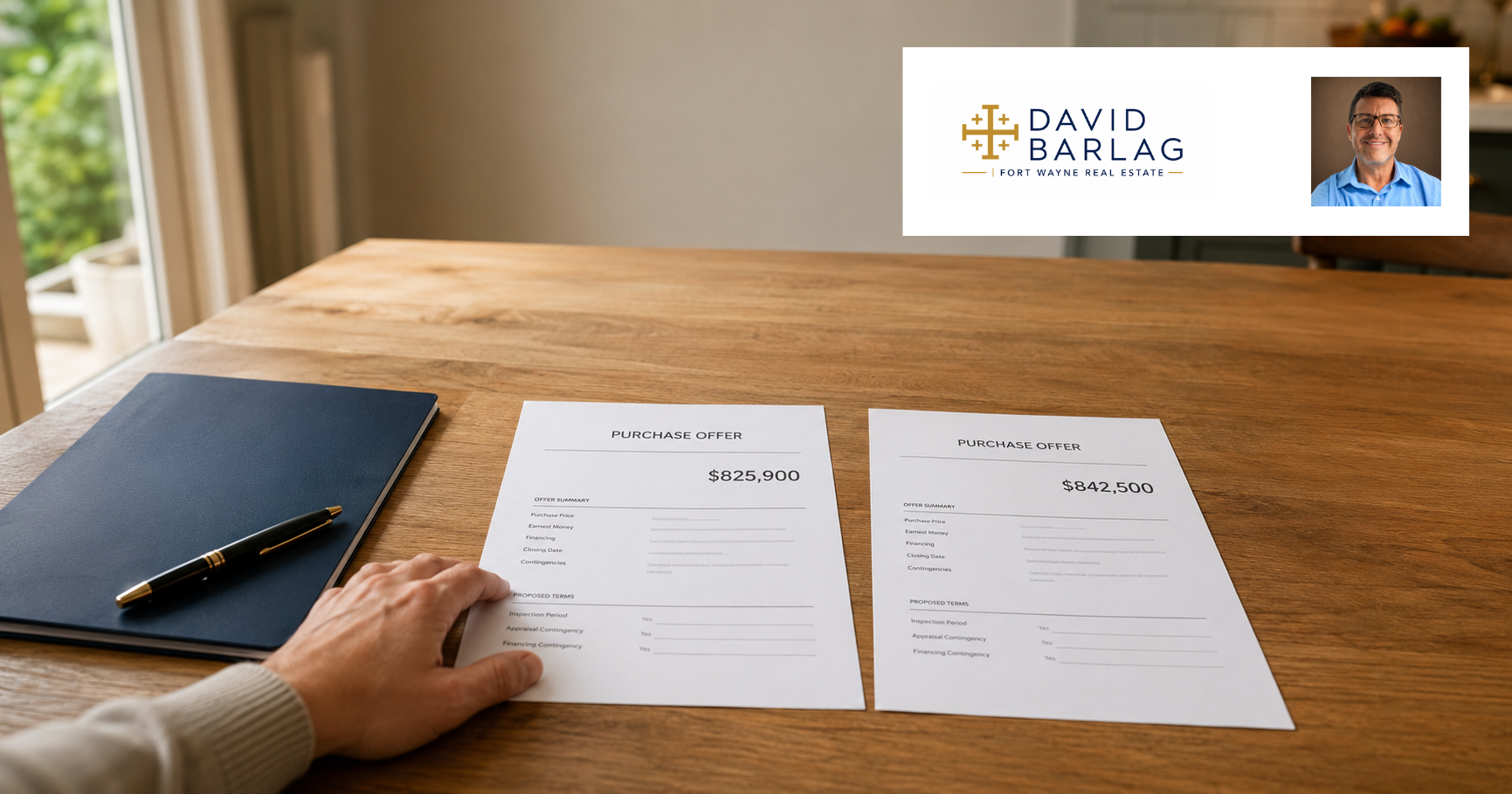
One of the happiest moments in selling a house is also one of the easiest moments to make an expensive mistake.
The offers come in. Everybody smiles. Then somebody points at the biggest number.
It’s the most natural move in the world, and most of the time it’s fine. But the highest offer and the best offer on your house aren’t always the same thing, and the gap between them is where sellers get hurt — not on offer day, when everyone’s happy, but weeks later, at a closing that never quite arrives.
Here’s the part worth slowing down on. The price at the top of an offer is a promise. It’s what a buyer says they’ll pay. Whether that promise turns into money in your account depends on everything underneath it — and that’s the part nobody’s looking at when they’re staring at the number.
I watched this play out with a seller who had more than one offer on his house. One paid more than the other. He took the one that paid less. The offer he accepted was stronger once you looked past the price, and the buyer and their agent came across as serious about actually buying the house rather than testing the market to see what they could get. One offer paid more. The other was more likely to hold together and reach the finish line. That’s the one that closed. The bigger number would have felt good for about a week.
I’m going to stop there on his deal, because the rest is his. What’s worth handing you is what actually matters when a seller has more than one offer in front of them — not a formula, just the things worth weighing before you let the top line decide for you.
One is the money behind the money: how is this buyer actually paying, and how solid is that financing? Cash is the cleanest; after that, financing that’s been through real underwriting is worth more than a letter someone got over the phone, because the stronger the financing, the lower the odds the deal quietly falls apart before closing. Another is appraisal — if a buyer offers a number the home may not appraise for, that price still has to survive the lender’s opinion of value, and when it doesn’t, you’re often back at the table negotiating anyway, sometimes for less than the steadier offer you already turned down. There’s the matter of exits, since every contingency in an offer is a door the buyer can walk back out of, and the question is how many there are. There’s how much earnest money is actually on the line, because a buyer with real money at risk behaves differently than one who can walk away and lose almost nothing. And there’s the timeline — whether the closing date fits what you need, or quietly fits the buyer and inconveniences you.
None of this is an argument against good money. Plenty of times the highest offer is also the cleanest — a solid buyer, sound terms, a number the house will support. When that happens, take it and don’t overthink it. The point isn’t to be suspicious of a big number. It’s to make sure the number you say yes to is the one that actually shows up.
That’s the whole job when the offers stack up: finding the best offer on your house, which isn’t always the one topping the paper contest on offer day — it’s the one that gets you to closing with the money and the terms you needed. You’re the one selling the house, and winning isn’t topping the paper contest on offer day — it’s getting to closing with the money and the terms you needed. A pile of competing offers is a good problem to have. It’s also the exact moment a seller can talk themselves into the riskier deal because it wore a bigger number.
If you’re preparing to sell, or if you find yourself comparing more than one offer, don’t assume the biggest number is automatically the best deal. I’d be happy to sit down with you, walk through the offers together, and help you understand what’s really on the table. Call me at 260-305-8804 and let’s have that conversation.